
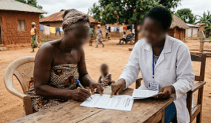
As researchers, it is our responsibility that data are collected and used in an ethical manner. The key to doing ethical research is obtaining informed consent, the roots of which date back to medical practices as early as the 16th century. The Nuremberg Code of 1947 established the requirement for voluntary consent in human experimentation, and the Declaration of Helsinki in 1964 set international standards for research ethics emphasizing informed consent. In 1974, the first Institutional Review Board (IRB) was established in the United States to oversee research ethics. Most recently, Revisions to the Common Rule in 2017 aimed to improve the informed consent process.
Researchers in the social sciences, are increasingly required to obtain IRB approvals prior to any data collection or reporting activities. While increasingly, low- and middle-income countries (LMICs) have in-country IRBs and many studies are required to go through these local IRBs, most studies are still reviewed and approved by IRBs in rich, donor countries.
Researchers and ethics experts located in high-income countries,, however well-intentioned, are often unaware of the ground realities of conducting research in LMICs. Many fancy protocols written in offices in Washington, DC are often adequate, at best, but not comprehensive when the rubber meets the road.
Common constraints include:
- Poverty: People may feel constrained to respond and respondents/interviewees sometimes expecting benefits to participation (jobs, education) that are not feasible is a common occurrence.
- Low literacy levels: People in LMICs often have no to little literacy and are unable to read consent protocols, and often unable to comprehend what a research study or evaluation means and so are unable to provide informed consent.
- Power imbalances: Gatekeepers, such as village chiefs, in many contexts control access to households and can effectively refuse consent for people in an entire village.
- Security risks: Militants and other armed actors might intimidate both respondents/interviewees and data collection staff, thus impacting informed consent processes.
- Political repression: Many LMICs still operate under more autocratic models where asking certain questions might put participants in harm’s way, and any leakage of such data could potentially cause immense harm.
- Hierarchical community/family structures affecting consent autonomy: Differential power within communities and families/households might result in some participants being unable to provide consent or feeling constrained to do so.
- Lack of support services: Often support services such as mental health hotlines, healthcare clinics for emergency treatment (such as for malnutrition) do not exist and participants identified during the data collection process to need such services have no where to go.
- Inadequate infrastructure for protecting data and ensuring confidentiality: Data storage infrastructure, including digital storage, might be compromised and subject to confiscation by communities and country governments.
- Cultural contexts: The concept of “informed consent” might not be understood in the same way across cultures.
In a recent presentation to DevelopmentAid and Includovate, I offered some ideas on how to mitigate these challenges. The key is to remember that we, in donor countries, do not know how to improve things and we almost never know better. But we can bring resources and expertise to help communities achieve their goals, and we must work with local researchers to ensure local needs and issues are being addressed. The principal guiding light to conduct ethical research should be to LOCALIZE, LOCALIZE, LOCALIZE.
Three questions we should always ask are:
- Who is not in the room and why?
- What is the worst-case harm if the data leak?
- What can we offer right now (not later)?
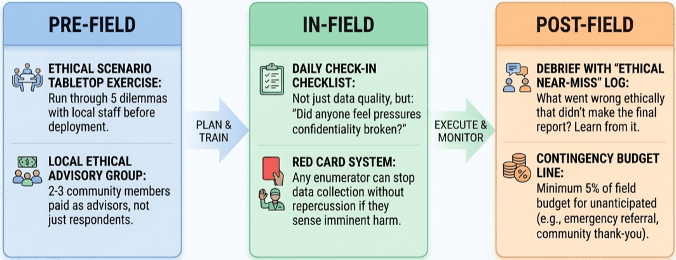
An actionable system that is cognizant of the ground-realities and that is adaptable to changing (sometimes rapidly) circumstance is something that we, as researchers, must build. The system should include the following basic building blocks:
As a researcher in LMICs, what are some challenges that you have encountered? How have you handled those challenges? What types of systems do you have in place to handle unexpected ethical issues in the field?
Do let us know in the comments or message us directly at wellworldsolutions@outlook.com.
 well world solutions